


22NW: Catalyst Biosciences Needs Change Now
2 October 2019
SEATTLE, Oct. 2, 2019 /PRNewswire/ --
Dear Catalyst Biosciences, Inc. Shareholders:
22NW, LP ("22NW" or "we") is one of the largest shareholders of Catalyst Biosciences, Inc (the "Company") (NASDAQ: CBIO) with ownership of approximately 6% of the Company's outstanding shares. As mentioned in our previous letter, we recommended shareholders apply pressure to the Company's Board of Directors and Executive team and replace them with our representatives. In particular, we believe long-time Board Director, Jeff Himawan, should be replaced immediately.
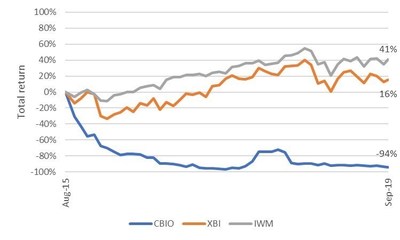
Since joining Catalyst Biosciences' Board of Directors in 2008 as a privately-traded company, and his inclusion into the publicly-traded company's Board in August 2015, we believe Jeff Himawan failed to add tangible shareholder value. Jeff's tenure at the Company includes: 1) shareholder losses of about -94% since the reverse merger in August 20151; 2) a failure to enter any drugs into Phase 3 trials2; and 3) a failure to show evidence of attracting new strategic partners to economically advance late-stage trials.
In our view, Jeff's struggles at the Company are not an anomaly but rather a continuation to a pattern of shareholder-value-erosion and poor executive leadership. We encourage the Company's shareholders to examine Jeff's track record with another publicly traded biomedical company, MediciNova. Based on our research, Jeff was added to MediciNova's Board of Directors in January 2006 and currently serves as its Chairman of the Board. Since its IPO in December 2006, MediciNova shareholders lost about -29% on their investment compared to the 412% and 136% of the SPDR S&P Biotech and iShares Russell 2000 ETFs, respectively:3
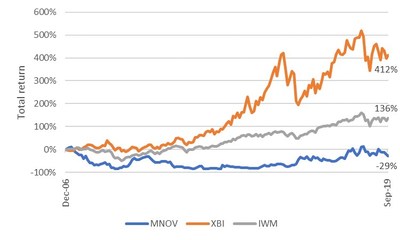
Like his time at Catalyst Biosciences, we believe Jeff failed as a corporate leader in his inability to solicit a significant third-party arrangement to guide MediciNova through Phase 3 trials and into production. In the process, MediciNova's cumulative losses totaled more than $200 million4 and its shareholders were significantly diluted. Its "Named Executive Officers," on the other hand, pocketed more than $50 million in the same period:5
Named Executive Officers | Yuchi Iwaka | Kazuko | Other | Total |
2006 | $ 3,090,882 | $ - | $ 5,752,407 | $ 8,843,289 |
2007 | 596,867 | - | 1,386,557 | 1,983,424 |
2008 | 926,666 | - | 2,093,931 | 3,020,597 |
2009 | 838,033 | - | 1,907,352 | 2,745,385 |
2010 | 759,060 | - | 2,169,511 | 2,928,571 |
2011 | 917,580 | 606,809 | 2,116,677 | 3,641,066 |
2012 | 907,434 | 516,051 | 2,282,057 | 3,705,542 |
2013 | 1,615,366 | 915,011 | 909,645 | 3,440,022 |
2014 | 769,098 | 682,791 | 447,673 | 1,899,562 |
2015 | 1,305,086 | 729,870 | 1,215,239 | 3,250,195 |
2016 | 1,936,263 | 1,175,331 | 1,651,256 | 4,762,850 |
2017 | 2,557,279 | 1,645,654 | 2,137,575 | 6,340,508 |
2018 | 2,853,305 | 1,825,668 | 1,325,127 | 6,004,100 |
Total | $ 19,072,919 | $ 8,097,185 | $ 25,395,007 | $ 52,565,111 |
Like Catalyst Biosciences, we believe MeidiciNova's executives and Essex Woodlands owned an insignificant amount of the equity and possessed great influence over MediciNova. Also like the Company, the primary beneficiaries from years of what we perceived to be strategic blunders and shareholder dilution were its executives, whose pay was also decided by Jeff Himawan through his role in the Compensation Committee. We do not believe this represents the type of "extensive experience in the biotechnology industry" from "considerable service on both public and private boards of directors" shareholders of the Catalyst Biosciences should find acceptable.
We also encourage shareholders to question Jeff Himawan's financial incentives to devote time away from his extensive number of privately-traded portfolio companies. Jeff's financial ties to the Company can be traced to the private-equity sponsor, Essex Woodlands Management, where he serves as a Managing Director.6 Since Jeff and Essex Woodlands became owners of the publicly-traded Company in August 2015, neither he nor the sponsor purchased additional shares. According to the most recently available 13-F data, Essex Woodlands owns less than 1% of the Company's equity. We believe Jeff's and Essex Woodlands' immaterial financial interest in the Company represents their ability and willingness to drive shareholder value in the Company.
Through his membership on the Board of Directors and the Company's Compensation Committee, we believe Jeff is content to allow insiders to disproportionately benefit at the expense of shareholders. During Jeff's tenure in the publicly-traded company, Catalyst Biosciences accumulated more than $100 million in losses7, failed to advance any drugs to or beyond Phase 3 clinical trials8, and failed to form significant strategic partnerships. Concurrently, its "Named Executive Officers" pocketed nearly $15 million in four years under a compensation plan approved by Jeff Himawan:9
Named Executive Officers | Nassim | Fletcher | Howard Levy | Other | Total |
2015 | $ 2,367,260 | $ 916,061 | $ - | $ 1,429,967 | $ 4,713,288 |
2016 | 569,634 | 383,659 | 414,104 | 695,833 | 2,063,230 |
2017 | 1,835,273 | 779,223 | 932,226 | - | 3,546,722 |
2018 | 2,442,313 | 969,476 | 1,198,847 | - | 4,610,636 |
Total | $ 7,214,480 | $ 3,048,419 | $ 2,545,177 | $ 2,125,800 | $ 14,933,876 |
At time of writing, the Company is valued less than the cash held on its balance sheet. We believe this suggests other market-participants place very little faith in the Company's Board and Executive team. We believe Jeff Himawan's poor track record as an executive leader and lack of ownership in the Company represents a significant hinderance to unlocking the Company's intrinsic value. Through our 6% ownership, we demand Board representation that will maximize shareholder value–now is the time for shareholders to apply pressure to the existing Board. Failing to place our representatives on the Board, we believe Catalyst Biosciences should immediately initiate a strategic sale process for the Company and/or aggressively pursue established partners for the drugs in the Company's pipeline.
About 22NW, LP:
Founded in 2015, 22NW Fund is a Seattle-based value fund with $150 million of assets under management. The firm specializes in small and microcap investments and has a multi-year investment horizon.
1 Bloomberg, total return for the period August 20, 2015 through September 20, 2019.
2 Based on clinicaltrials.gov registrations.
3 Bloomberg, total return for the period December 7, 2006 through September 20, 2019.
4 Measured by the change in retained earnings for the period beginning December 31, 2006 and ending June 30, 2019.
5 Based on the 'Summary Compensation Table' found in MediciNova's annual proxy filings.
6 https://www.ewhealthcare.com/team/detail/jeff_himawan
7 Measured by the change in retained earnings for the period beginning December 31, 2015 and ending June 30, 2019.
8 Per clinicaltrials.gov registrations.
9 Based on the 'Summary Compensation Table' found in Catalyst Biosciences' annual proxy filings.
 View original content to download multimedia:http://www.prnewswire.com/news-releases/22nw-catalyst-biosciences-needs-change-now-300929229.html
SOURCE 22NW

22NW: Catalyst Biosciences Needs Change Now
27 September 2019
SEATTLE, Sept. 27, 2019 /PRNewswire/ --
Dear Catalyst Biosciences, Inc. Shareholders:
22NW, LP ("22NW" or "we" or "us") is one of the largest shareholders of Catalyst Biosciences, Inc (the "Company") with ownership of approximately 6% of the Company's outstanding shares. We believe the current Board of Directors and Executive team at Catalyst have failed its shareholders as evidenced by a lifetime share price decline of roughly -94%, compared to the +16% and +41% returns of the SPDR S&P Biotech and iShares Russell 2000 ETFs, respectively, over the same time period.1,2
Our plan to remedy the situation and unlock the Company's intrinsic value is three-fold: 1) place independent members on the Company's Board of Directors that directly represent CBIO shareholders; 2) initiate strategic alternatives to sell the company; and 3) cease rubber-stamping excessive executive compensation agreements. Proper corporate governance and management oversight could help unlock the intrinsic value we see in the Company. Failing these steps, we believe a simple liquidation could generate significant returns for the Company's shareholders as the Company's cash balance is $7.82/sh, which is 33% higher than the current share price.3
Shareholders should recall the reverse-merger transaction details with Targacept which placed many of the Company's current Board Members in control that closed in August 2015. We believe these Board Members have failed shareholders in every meaningful way. Operationally, the Company accumulated more than $100 million in losses4, no drugs were advanced to or beyond Phase 35, and no new significant strategic partnerships were formed in the same period. Accountability and transparency diminished, too. The current Executives immediately ceased quarterly calls with its investors once the reverse merger was completed.
We believe the two primary factors guiding the current Board and Executive team are their lack of ownership in the Company and friendly co-investment history. Based on the latest filings, Nassim Usman, Augustine Lawlor, Jeff Himawan, and their respective private-equity sponsors, Morgenthaler, Healthcare Ventures, and Essex Woodlands collectively own less than 3% of the Company and have not made material equity purchases in the Company since the merger was completed.
We believe these Board Members exhibit a disproportionate amount of control over the Company's strategic priorities and do not represent shareholders. In fact, the top five actively managed shareholders in the Company, including us, own nearly a third of the Company and have no representation on the Board. We find this is offensive considering the exceptionally weak execution and share price performance that has occurred under the existing Board. The time for change is now.
More concerningly, these insiders have individually profited the most from the Company's current "go-it-alone" tactic that required frequent shareholder dilution. The Company's 'Compensation Committee,' which includes Augustine Lawlor, Jeff Himawan, Eddie Williams, and Errol Souza, awarded its "Named Executive Officers" with nearly $15 million of pay since fiscal year 2015:6
Named Executive Officers | Nassim Usman | Fletcher Payne | Howard Levy | Other | Total |
2015 | $ 2,367,260 | $ 916,061 | $ - | $ 1,429,967 | $ 4,713,288 |
2016 | 569,634 | 383,659 | 414,104 | 695,833 | 2,063,230 |
2017 | 1,835,273 | 779,223 | 932,226 | - | 3,546,722 |
2018 | 2,442,313 | 969,476 | 1,198,847 | - | 4,610,636 |
Total | $ 7,214,480 | $ 3,048,419 | $ 2,545,177 | $ 2,125,800 | $ 14,933,876 |
The current CEO, Nassim Usman, pocketed more than $7 million since 2015. We believe shareholders should be concerned with the Company's Executive team's willingness and ability to siphon value away from the Company as the Company's drug prospects get brighter. Based on our research of Healthcare Ventures and Essex Woodlands, we were not surprised to see a lopsided compensation arrangement in favor of the Company's Executives, but this needs to end immediately.
All told, we do not believe the current executive team is capable of, or incentivized to, realize maximum shareholder value from its current drug pipeline. One of the Company's top drug prospects, MarzAA, demonstrated positive clinical trial results in July 2019. Since the news was disclosed, we see no evidence that management took concrete steps to solicit strategic investors in the Company and explore options that could require the management team to relinquish control. Despite the good news, the Company's share price is down about -37%7, which we believe represents a complete failure on the part of the Executive team to appropriately convey the positive developments at the Company to the market. At time of writing, the Company is valued less than the cash held on its balance sheet, which suggests to us other market-participants also place very little faith in the Company's Executive team. We believe the poor executive leadership and lack of ownership in the Company by its leaders represents a significant hinderance to unlocking the Company's intrinsic value.
Through our 6% ownership, we demand Board representation that will maximize shareholder value– now is the time for shareholders to apply pressure to the existing Board. Failing to place our representatives on the Board, we believe Catalyst Biosciences should immediately initiate a strategic sale process for the Company and/or aggressively pursue established partners for the drugs in the Company's pipeline.
About 22NW, LP:
Founded in 2015, 22NW Fund is a Seattle-based value fund with $150 million of assets under management. The firm specializes in small and microcap investments and has a multi-year investment horizon.
1 Bloomberg, total return for the period August 20, 2015 through September 20, 2019.
2 Outstanding shares, sourced from Bloomberg, increased from about 760,800 shares (reverse-split adjusted) to about 12,008,500 shares between September 30, 2015 and September 20, 2019.
3 As of September 20, 2019.
4 Measured by the change in retained earnings for the period beginning September 30, 2015 and ending June 30, 2019.
5 Per clinicaltrials.gov registrations.
6 Based on the 'Summary Compensation Table' found in Catalyst Biosciences' annual proxy filings.
7 Bloomberg, total return for the period beginning July 5, 2019 and ending September 20, 2019.
 View original content to download multimedia:http://www.prnewswire.com/news-releases/22nw-catalyst-biosciences-needs-change-now-300926557.html
SOURCE 22NW
